The Britain-Nepal Medical Trust
 
Home
About BNMT
Objectives
News
Stories
Trek
Reports
Gallery
Donate
Recruitment

News

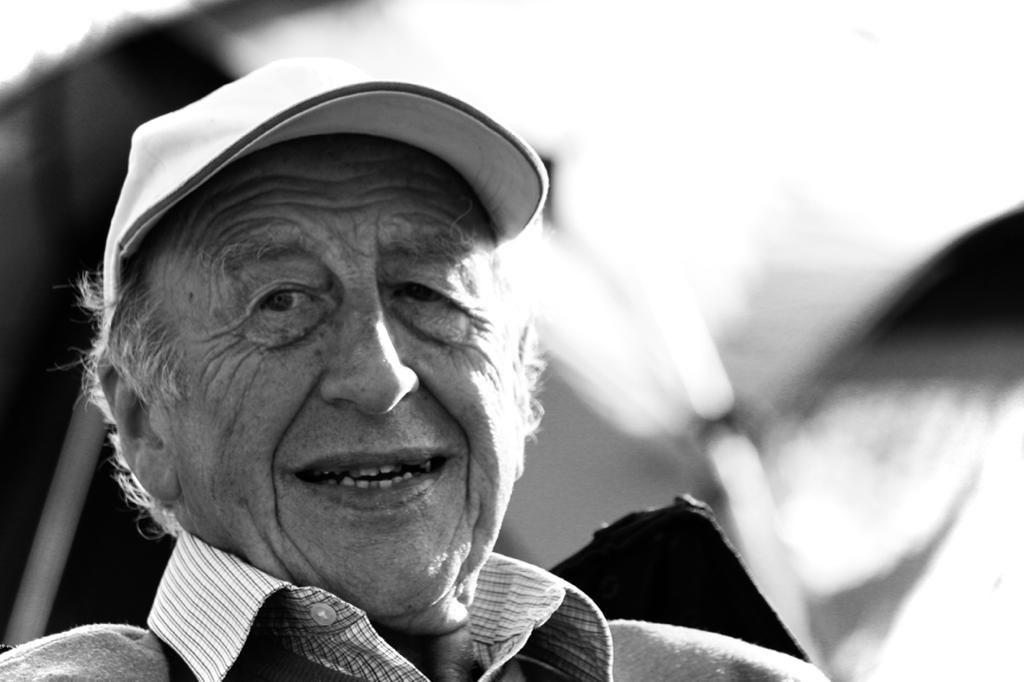
IN MEMORIUM: Professor Wallace Fox CMG

Sadly we report another loss of a long time friend and supporter of BNMT. Professor Wallace Fox, who has died aged 89, was the leader of the Medical Research Council’s programme that developed the standard worldwide treatment of tuberculosis.

Professor Fox’s connection with BNMT goes back to 1977 when he was appointed a Trustee, a position he held until 1990, following which he became a Patron.

His work on the treatment of tuberculosis and organisation of the national survey of drug resistance led Sir John Crofton to devise a combined drug regimen that became the standard treatment in Western Europe for fifteen years. Importantly, in a randomised control trial in India, he demonstrated that treatment of TB in a sanatorium was not required and home-based treatment was successful and cheaper.

In 1965 he was appointed Director of the Medical Research Council’s TB research unit. His work, internationally, resulted in the standard six months course with two drugs – rifampicin and isoniazid plus pyrazinamide for the first two months which was recommended worldwide by the World Health Organisation (WHO). He also had a leading role on WHO expert committees.

While his main work was on pulmonary TB he also made important contributions to the treatments of spinal and pericardial TB and lung cancer.

He received numerous medals from learned societies and in 1973 was honoured nationally as a Companion of St. Michael and St. George (CMG).

The legacy of his work worldwide lives on through the many lives saved from the ravages of tuberculosis.

IN MEMORIUM: Sir John Crofton

BNMT extends its condolences to the family of Sir John Crofton, a leader in the global battle against tuberculosis, our patron and friend. Sir John passed away at the age of 97 on 3rd November 2009. 

Sir John’s contribution to medicine and health in general and tuberculosis control in particular was massive. He published the first controlled trial of streptomycin in 1950. Soon after he established the validity of the first population-based approach to tuberculosis control—the Edinburgh Method, using triple-drug therapy to achieve unprecedented cure rates. Later he was an early proponent of Directly Observed Therapy, Short course or DOTS, which remains the centrepiece of the World Health Organization’s strategy for tuberculosis control. 

Sir John was Professor of Respiratory Diseases and Tuberculosis, University of Edinburgh, 1952-77, President of Royal College of Physicians of Edinburgh 1973-76 and Chairman of the International Union against Tuberculosis and Lung Disease, 1984-88. His ground breaking textbook Crofton and Douglas's Respiratory Diseases, was first published in 1969 and reached its fifth edition in 1990; his Clinical Tuberculosis reached its 3rd edition in 2009. Sir John also actively campaigned for tobacco and alcohol control. 

Sir John's connection with the Trust goes back 25 years, when he was invited to become a Patron in 1984. In subsequent years, Sir John visited the Trust’s programme in Nepal and attended a number of Board as well as TB committee meetings. 

We have valued Sir John’s fellowship and advice and his legacy lives on. 

Sir John Crofton wins Edwin Chadwick Medal

Sir John Crofton, a Patron of the Trust, received the Edwin Chadwick Medal from The London School of Hygiene & Tropical Medicine. 

This medal is awarded triennially in recognition of outstanding contributions to the advancement of public health. 

Sir John's work on TB began in 1940 with the use of chemotherapy to treat the disease. He chaired WHO committees that initiated the DOTs programmes for TB control. He visited the Trust in Nepal in the '70s and '80s and helped to launch our programmes of short course chemotherapy. 

The award commends him for being partly responsible for the falling death rates from TB worldwide".

Click here to make a donation
Click here to find out about Nepal
Click here to contact BNMT
   

New Patron

Dr. Knut Ovreberg having retired after 24 years service as a Trustee has agreed to become a Patron.

Dr. Ovreberg trained in Oslo before becoming a consultant in chest medicine at Harstad, in the Artic circle, where he developed the chest clinic, equipping it to a very high standard. He became Norway’s expert in tuberculosis and served on major governmental committees, the Board of the Norwegian Association of Heart & Lung Patients (LHL), as well as on the Board of Trustees of the Britain Nepal Medical Trust.

Over the years, through his work with the International Union Against Tuberculosis & Lung Disease (IUATLD) and the World Health Organisation, he has been recognised as a world expert in tuberculosis and has frequently visited Africa, India and Nepal to review TB programmes. In recognition of his contribution to the worldwide fight again TB he has been awarded the IUATLD’s medal. In his retirement he continues to live in Harstad.


BNMT welcomes another new Patron in keeping with the Trust’s long association with Gurkha regiments.

James Nigel Buchanan Stuart is a retired Colonel of the Royal Engineers and of the Gurkha Engineers. He was born in Quetta, India, his parents both being from Indian Army families. They left India in 1955. He has travelled and worked both in Northern India and Eastern Nepal.

In retirement he is an enthusiastic bee-keeper and also trains new beekeepers. He is a trustee of the Perowne Trust which supports Nepalese engineering undergraduates.


40th Anniversary of BNMT

In October 1966, the first approach was made to the Government of Nepal, by Dr. John Cunningham offering to supply a team of doctors and nurses from the United Kingdom to work in Nepal on a long term basis. On 13th April, 1968, the team begin their 8,000 mile journey overland to Nepal in specially fitted Land Rovers, finally reaching Kathmandu on 28th May, 1968.

More than 10 years down the line, by 1979, BNMT’s assistance had increased many fold in terms of resources as well as programmes supported. TB clinics and laboratories were established in many parts of eastern Nepal, namely, Bhojpur, Dhankuta, Panchthar, Sankhuwa Sabha, Taplejung and Terathum. In the process of pioneering the TB programme in Nepal, BNMT introduced and supported the development of national control programmes against TB, leprosy and other conditions that mostly affect the poor. 

The essential drug supply programme, otherwise known as the Hill Drug Scheme, started in the year 1969, with four shops in rural Nepal, and gradually expanded and matured as a highly successful programme. With years of hard work, BNMT championed the programme, which is now taken up by many other external donors/partners and the Government as the Community Drug Supply Scheme. 

BNMT also pioneered the development and expansion of self-financing drug schemes and thus improved greatly the access to essential medicines at the community level. These self-financing drug schemes became the model for successful implementation in many other districts throughout Nepal.

In 1985, BNMT was the first agency to implement an innovative community health programme based on improvement in women’s literacy. This programme has also been replicated by many other agencies in all parts of Nepal.

BNMT’s current endeavours are streamlined under the comprehensive ‘Health Improvement Programme’ which strives for increased health service utilization and improved health status of disadvantaged groups such as dalits, jana-jaties, underprivileged and the deprived communities by adopting a rights based approach that reinforces the linkage between supply and demand of essential health services. 

The Rights Based Approach focuses on the empowerment of communities to demand their health rights by facilitating various innovative activities at the community level, such as Participatory Health Analysis and Action Process (PHAAP) which helps the groups identify and prioritize their problems, develop action plans and come-up with solutions on their own. Also Health Financing Schemes, to ensure accessibility of health services for the poorest of the poor and the Safe Motherhood Innovative Programme. Similarly, the supply side is strengthened by building the capacity of service providers/duty bearers through training and other support so that they can deliver better services to the community.


Immediate Past Chairman of BNMT Board of Trustees, Dr. Ian A. Baker, Awarded M.B.E.

On 29th December, 2007, it was announced that H.M. the Queen had appointed the immediate past Chairman of BNMT’s Board of Trustees, Dr. Ian Baker, as a Member of the Most Excellent Order of the British Empire (MBE). This honour is a fitting tribute to Ian’s leadership and dedication to BNMT. The Board and Staff of BNMT extend their congratulations to Ian for this well deserved honour.


40th Anniversary Celebrations, 27th November, 2007, Kathmandu.


The Honourable Minister for Health, Mr. Giriraj Mani Pokhrel, graced the occasion as the chief guest. 

On behalf of the Government of Nepal he said “I should like to urge and welcome BNMT to work in other additional areas and I make a commitment from this very platform that the Government will provide the necessary support in making it possible.” 

He also expressed the Government's commitment to fulfil the health rights of its citizens.


The Honourable Minister for Health, Mr. Giriraj Mani Pokhrel

The Ambassador of the United Kingdom, His Excellency Dr. Andrew Hall congratulated BNMT on its 40th anniversary. His Excellency added that “in recent times we have another focus, which is to help the people of Nepal to restore peace. 

As old friends we want to help Nepal put years of long conflict firmly behind it and return to peace and stability, building a more democratic and prosperous future for the people of Nepal and the foundation for that is of course a healthy and educated population.”


The Ambassador of the United Kingdom, His Excellency Dr. Andrew Hall


Ms. Munni Pariyar, community member said “I was totally unaware of health rights; right to quality health services, maternal and child health, until I received training though the BNMT programme. 

Because of the training, I am now aware and determined to make changes in my community. There has been a visible change in my community because of the BNMT programme and we seek continued support from BNMT and the Government of Nepal for the empowerment of the Dalit community.”


Ms. Munni Pariyar


The BNMT Trust Chair, Mr. Jeffrey Mecaskey, thanked all the stakeholders for supporting BNMT in its endeavours. 

He said “we believe that we have done a satisfactory job over the past 40 years. But there is a lot more to be done, so let's join our hands and work in collaboration and co-ordination to reach out to the marginalised communities of Nepal with the Rights Based Approach to the health programme."

Mr. Jeffrey McCaskey


Read a full account of the celebrations (.doc format)

Dr. Gillian Holdsworth completes trek

Gillian Holdsworth being congratulated on the completion of her trek. Dr. Gillian Holdsworth, Trustee of BNMT, was congratulated by a standing ovation for the successful completion of her Trans-Nepal Trek. 

The trek was one of the events of BNMT’s 40th anniversary celebration programme and drew the attention of many of the national and international media and trek enthusiasts, providing increased recognition for BNMT’s work in rural Nepal. 

The trek also helped raise funds for BNMT.

More...


Nepal becomes a republic

Since 1990 Nepal has suffered considerable turbulence in its attempt to embrace more open political and economic systems. Despite achieving democratic rule in April 1990 in the wake of a “People’s Movement”, the country soon faced internal armed conflict after the CPN-Maoist launched an insurgency in 1996. Some 13,000 people were killed, 400,000 rural families displaced and infrastructure facilities, estimated to cost US $ 400 million, destroyed (Source: www.adb.org). Following a comprehensive peace agreement signed on 22nd November 2006 the Constituent Assembly election was finally held on 10th April 2008.

Kathmandu, 28 May , 2008

Half an hour before the stroke of midnight, Nepal became a Republic. The transition to “a secular, federal, democratic, republic nation” was formalised with a resolution moved by the Home Minister K P Sitaula and was passed by 560 votes to four by the newly sworn in Constituent Assembly.

Minutes later, the Royal Standard flying atop the Narayanhiti palace — home to five past kings— was taken down by palace officials.

The transition to a democracy meant abolition of the monarchy and dethronement of King Gyanendra, with all the privileges of the royal family removed with immediate effect. He will have no more rights than any other Nepali citizen.

While the Constituent Assembly has the prime responsibility of drafting a new constitution for Nepal, it also functions as a regular parliament. It is reported that 30% of the elected members are women. On 28th May, 2008, through the fourth amendment to the interim constitution of Nepal, a largely ceremonial President was established as the constitutional head of state. The Prime Minister continues to be the head of the Government, with the Maoist leader heading the current government


© 1995-2009 BNMT --- All Rights Reserved Copyright --- Privacy --- Terms
Britain Nepal Medical Trust - Company No 921566 (England) Registered Charity No 255249